

 Vietnamese
 Japanese
 English
ECB explores instant payment link with Brazil's Pix
Fujigo Software Solutions
Member of M&C Holdings (Japan)
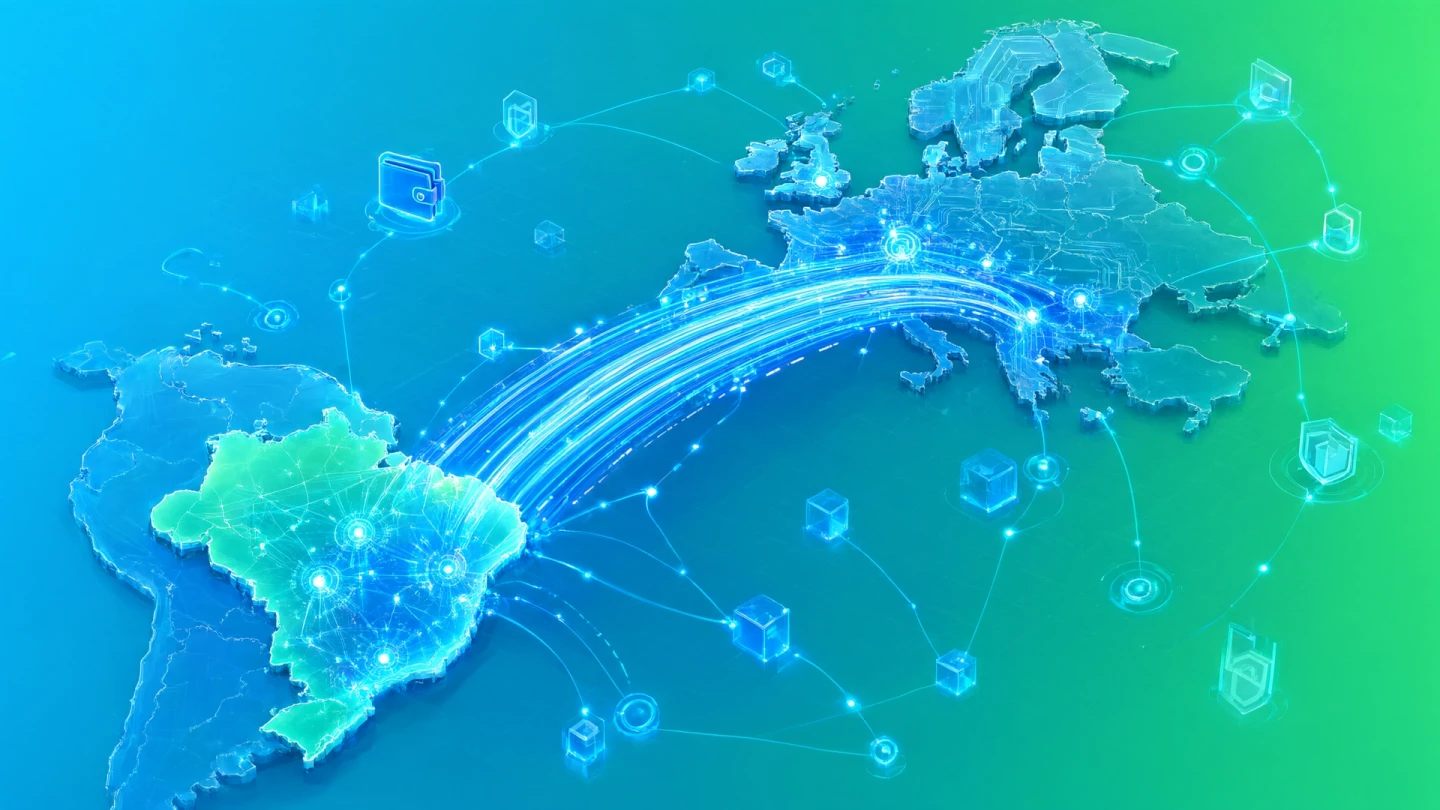
Cross-border payments are about to take a major leap forward as the European Central Bank (ECB) explores connecting its instant payment system TIPS with Pix — the platform that processes more transactions than Visa and Mastercard combined in Brazil.
First international expansion for Pix
According to Reuters on September 3, 2026, the ECB confirmed it is exploring a potential interlinking between its TARGET Instant Payment Settlement (TIPS) platform and the Central Bank of Brazil’s Pix platform. This would mark the first cross-border expansion of Pix, which has dominated payments in Brazil since its launch in 2020.
Technical teams from both central banks are assessing whether an interconnection is feasible, and a pilot project could be launched in 2028.
Pix: An unprecedented success story
Since its launch in 2020, Pix has achieved unprecedented growth:
- Reached 70% of Brazil’s population, or more than 150 million users
- Processes more transactions than Visa and Mastercard combined
- Became one of Brazil’s most preferred payment methods
- Extended to Argentina, allowing Brazilians living there to make cross-border payments and transfers
According to PYMNTS Intelligence’s report “Digital Developments: Charting Digital Payment Growth in Latin America,” Pix has significantly boosted financial inclusion by encouraging the opening of digital accounts across all societal segments.
Why the TIPS-Pix link matters
Linking the two instant payment systems could deliver multiple benefits:
- Lower costs: Eliminate intermediaries and reduce cross-border transaction fees
- Faster speed: Instant transactions instead of 2-5 days for traditional international transfers
- Broader access: Pix users can pay European partners directly
- Better transparency: Easier transaction tracking
The Central Bank of Brazil in its August 2026 report sounded more certain than in the past about linking Pix with other instant payment systems, stating this could lower costs, accelerate transactions, broaden access, and improve transparency.
Impact on international trade
The TIPS-Pix link would be particularly significant for:
- Import-export businesses: Faster payments, lower costs for Brazil-Europe trade
- Migrant workers: Quick and cheap remittances back home
- Tourism: Instant payments when traveling between the two regions
- E-commerce: Cross-border purchases as easy as domestic ones
Brazil is a major trading partner of the EU, with bilateral trade reaching billions of euros annually. Instant payments would eliminate one of the last barriers to international trade: waiting time.
Lessons for Vietnam: Regional payment connectivity
Vietnam has made significant progress in digital payments with interbank QR codes (VietQR) and Napas. However, cross-border payments still face many limitations:
- International transfers still take 2-5 days
- High transaction fees (2-5% of transfer amount)
- Lack of connectivity with other countries’ instant payment systems
The lesson from TIPS-Pix: Central banks need to proactively cooperate to build cross-border payment infrastructure. Vietnam could consider connecting VietQR/Napas with:
- Singapore’s instant payment system (PayNow)
- Thailand’s PromptPay system
- Malaysia’s DuitNow system
ASEAN already has a payment connectivity initiative, but progress has been slow. The TIPS-Pix link could serve as a model for ASEAN to accelerate progress.
Lessons for Japan: Cross-border instant payments
Japan has the Zengin System for instant payments, but it primarily serves domestic transactions. Connectivity with international systems is limited.
The TIPS-Pix link shows: Major economies are proactively building cross-border payment infrastructure. Japan needs to consider connecting the Zengin System with:
- Europe’s TIPS
- Brazil’s Pix
- ASEAN’s instant payment systems
This is particularly important as Japan promotes international tourism and cross-border e-commerce.
The future of cross-border payments
The TIPS-Pix link is just the beginning. In the next 5-10 years, expect:
- Global instant payment networks: Like the internet, but for money
- Stablecoins and CBDCs: Central bank digital currencies may integrate with instant payment systems
- Borderless payments: Buy from anywhere, pay instantly, costs near zero
The ECB and Central Bank of Brazil are leading this trend. The question is: when will other central banks join?
Source: ECB Explores Instant Payment Link With Brazil’s Pix — PYMNTS, September 2026