

 Vietnamese
 Japanese
 English
Odoo 20 launches with deep India-specific compliance features
Fujigo Software Solutions
Member of M&C Holdings (Japan)
Odoo ERP
Odoo 20 launches with deep India-specific compliance features
Odoo 20 was officially unveiled at Odoo Experience 2026, bringing significant improvements to India-specific compliance features alongside deeper AI integration into business workflows.
- ✓Strong revenue growth: 2026 billing revenue expected to reach €900 million (up 45%), targeting €1 billion by 2027
- ✓Workforce expansion: Global workforce reaches nearly 8,000 people, aiming for 10,000 employees next year
- ✓Deep India localization: GST, TDS, payroll, and financial reporting optimized for Indian businesses
- ✓AI workflow integration: AI moves from standalone chatbot to embedded in daily business operations
Impressive growth and globalization strategy
Odoo enters the next phase from a position of considerable growth. Its 2026 billing revenue is expected to reach approximately €900 million, up 45%, while its target remains €1 billion in 2027.
Its workforce has grown to nearly 8,000 people globally, with an ambition to reach 10,000 employees by next year. For a growing technology company, these numbers also highlight the changing role of ERP software. Businesses are no longer looking only for systems that digitise individual tasks. They increasingly want platforms that can connect different parts of the organisation.
Odoo 20 brings the global and the local together
Odoo 20 covers several core business functions, including CRM, sales, accounting, inventory, manufacturing, eCommerce, websites and HR.
Global updates
Some of the global updates include improved performance, more intuitive user interfaces, and deeper integration with third-party tools. The system is also optimized for mobile, allowing users to access it from any device.
India focus
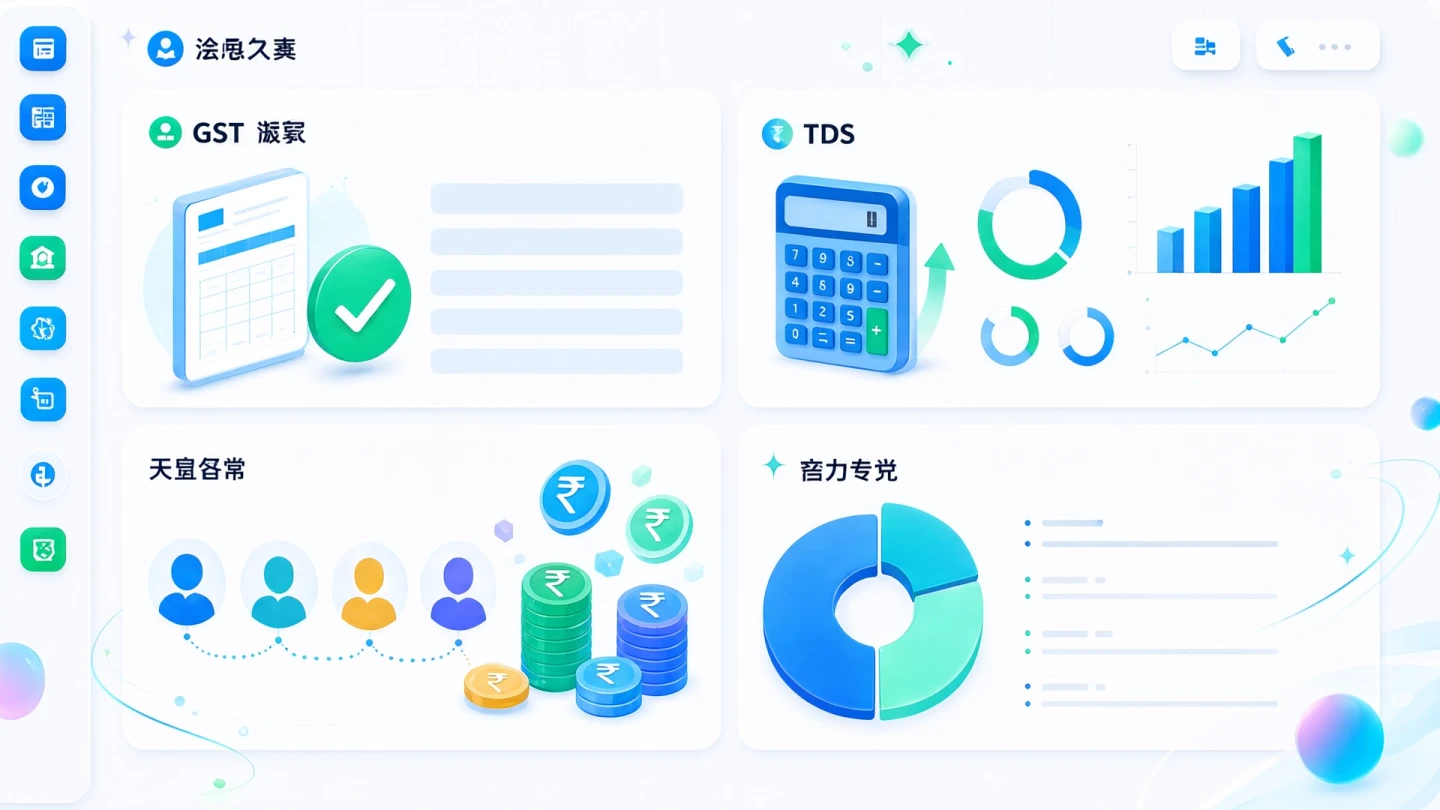
For Indian companies, one of the key parts of the new release is its expanded India localisation. The updates cover accounting, GST, TDS, payroll and financial reporting, helping businesses manage local requirements within their regular workflows.
Accounting and GST
Odoo 20 introduces several updates to make accounting more suitable for Indian businesses. Businesses can now issue credit notes for price adjustments and use a new Bill of Entry flow for imported goods. The latter helps record import customs duty and include it in inventory costing through landed costs.
GST compliance has also been expanded for Composition Taxpayers, with support for the GST Composition Scheme and statutory returns such as CMP-08 and GSTR-4.
The release also adds support for financial statements with the prescribed presentation, classification and disclosures under Schedule III, Division I of the Companies Act.
More flexibility for TDS
TDS workflows have been made more flexible in Odoo 20. Businesses can choose between TDS & Payment, TDS Only, or Payment Only, depending on how they manage tax deductions and payments.
This gives finance teams greater control while reducing the need to manage different steps manually.
Payroll gets a wider set of updates
Odoo 20 also brings several changes to payroll.
Employees can generate and print their TDS declarations directly from their employee profiles. A new Gratuity Calculation Report provides details of employee gratuity eligibility and the applicable payable amount.
Payroll teams can also use a new EPF Summary Report to track employee contributions and balances. The release introduces more flexibility in sandwich leave calculations, allowing businesses to include weekends, company holidays, or both when calculating leave across non-working days.
For employee exits, the End of Collaboration process now includes a Notice Period tab, while Full and Final Settlement payslips can be generated directly when the dismissal and departure dates are the same. TDS processing has also been streamlined with monthly TDS challans and quarterly Form 138 generation.
For salary processing, applicants can select benefits while signing their offer through a new salary configurator. Businesses using HDFC can also generate an HDFC eNET file directly from individual payslips or a pay run, helping simplify salary payments.
AI moves from conversation to execution
Beyond localisation, AI is another major focus of Odoo 20. Instead of treating AI as a separate chatbot, the focus is increasingly on bringing it into everyday business workflows.
Some of the key capabilities include automation of repetitive tasks, intelligent suggestions based on historical data, and integration with external AI tools like GPT-4 and Claude.
The larger shift is therefore about bringing AI closer to everyday business operations. And as ERP systems hold more structured information across finance, sales, inventory, HR and other functions, that data can provide the foundation for AI to become more useful, contextual and action-oriented.
Implications for Vietnamese businesses
While the India localisation updates may not directly apply to Vietnamese businesses, the AI improvements and overall performance enhancements in Odoo 20 benefit all users. Vietnamese companies can leverage:
- Improved performance: Faster, more stable systems for large-scale operations
- Deep AI integration: Task automation and intelligent suggestions
- New interface: Better user experience across all devices
- Expanded compliance: Flexible compliance framework customizable for local requirements
Conclusion
Odoo 20 marks an important step in Odoo's globalization strategy, with a special focus on meeting specific compliance requirements of each market. For businesses seeking a flexible, customizable ERP solution with strong AI integration, Odoo 20 is a worthy consideration.
With revenue expected to reach €900 million in 2026 and targeting €1 billion in 2027, Odoo is proving that the open-source ERP model can compete effectively with expensive proprietary solutions.
Source: Odoo 20 Strengthens Business Operations with Deeper India-Specific Compliance Features — Telangana Today, October 23, 2026