

 Vietnamese
 Japanese
 English
N3XT unveils tokenized cross-border payments: A turning point for international transactions
Fujigo Software Solutions
Member of M&C Holdings (Japan)
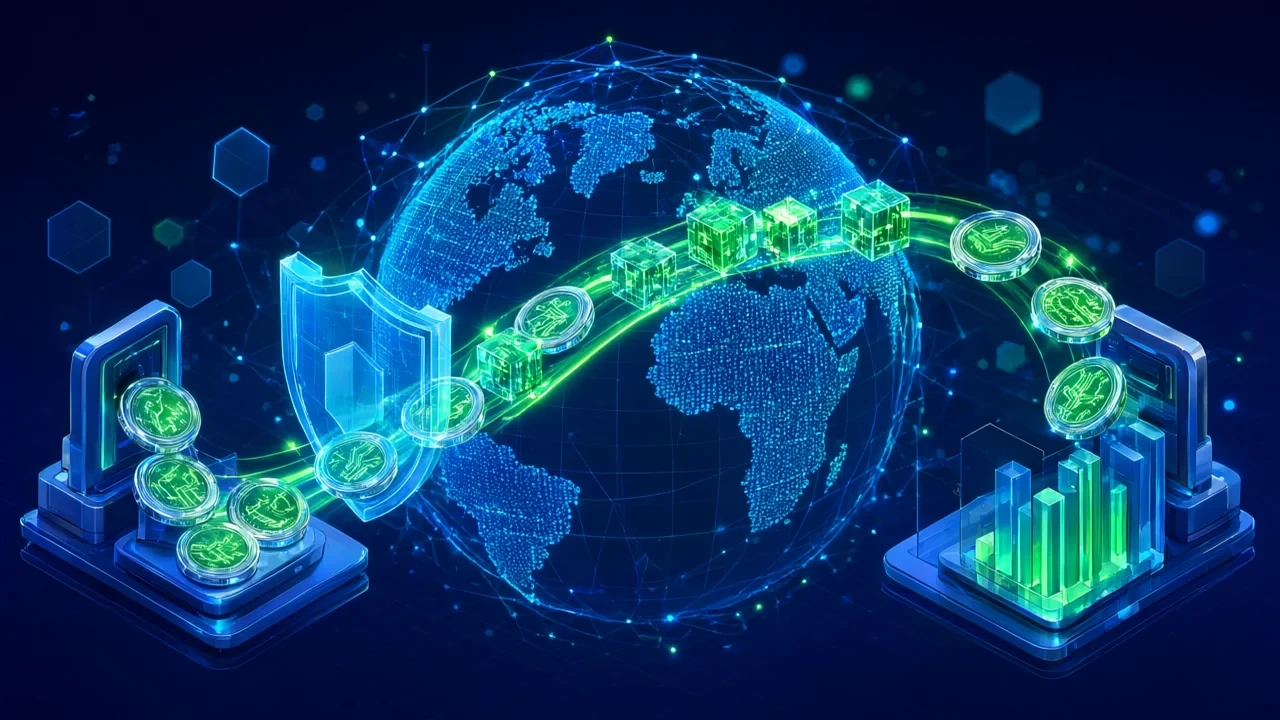
Cross-border payments are about to be revolutionized
N3XT, a company specializing in decentralized finance solutions, has unveiled its tokenized cross-border payment platform. This marks a significant step in applying blockchain technology to international payments—a sector long dominated by the aging SWIFT system and correspondent banks with high fees.
According to PYMNTS, N3XT’s new platform enables the tokenization of currencies and assets on blockchain, creating near-instant international payment transactions at significantly lower costs than traditional methods.
The problem with current cross-border payments
Today’s international payment system still relies on correspondent banking networks established decades ago. Each cross-border transaction must pass through multiple intermediaries, with each layer adding cost and time:
Time: A typical international wire transfer takes 1-5 business days, depending on the number of intermediary banks and time zones.
Cost: Average transaction costs are around 3-6% of the transaction value, including currency conversion fees, correspondent bank fees, and processing charges.
Transparency: Senders often don’t know exactly where their transaction is in the processing chain, and the final exchange rate may differ from the initial quote.
How tokenization solves the problem
N3XT’s tokenization technology approaches the problem in a fundamentally different way. Instead of routing money through multiple correspondent banks, the platform creates “digital tokens” representing currency value on the blockchain.
When a business needs to make a cross-border payment:
- Fiat currency is converted into tokens on the blockchain
- Tokens are transferred directly to the recipient via the decentralized network
- The recipient receives tokens and converts them back to local fiat currency
The entire process takes seconds instead of days. Costs drop significantly because there are no correspondent banks. And transactions are recorded on the blockchain, ensuring transparency and immutability.
Impact on import-export businesses
For import-export businesses—especially in Vietnam, where trade volume exceeds 170% of GDP—this technology has particularly important implications:
Reduced transaction costs: With fees dropping from 3-6% to under 1%, businesses can save billions of dong annually on international transactions.
Faster settlement: Instant payments help businesses manage cash flow better, reduce working capital needs, and increase competitiveness.
Transparency and security: Blockchain ensures all transactions are publicly recorded, reducing fraud risk and enhancing regulatory compliance.
Challenges and barriers
Despite its great potential, tokenized payments still face several challenges:
Regulatory framework: Many countries lack clear regulations for digital assets and tokens. KYC/AML compliance on decentralized blockchains remains a technical challenge.
Price volatility: If tokens are pegged to cryptocurrencies rather than stablecoins, price fluctuations can create transaction risk.
Broad adoption: The system is only effective with sufficient participation. Convincing banks and businesses to switch to a new system takes time.
The future of international payments
N3XT isn’t the only player pursuing this vision. Ripple, JPMorgan (with Onyx), and other major banks are also developing similar solutions. But N3XT’s differentiator is its decentralized approach—not dependent on any single bank or institution.
As international trade continues to grow and the need for faster, cheaper payments becomes urgent, tokenization technology could become the new standard for cross-border payments. The question is no longer “whether” but “when” — and N3XT is positioning itself at the forefront.
Source: N3XT: Tokenized Cross-Border Payments — PYMNTS, August 2026