

 Vietnamese
 Japanese
 English
Ramp launches AI model router, directly competing with OpenRouter
Fujigo Software Solutions
Member of M&C Holdings (Japan)
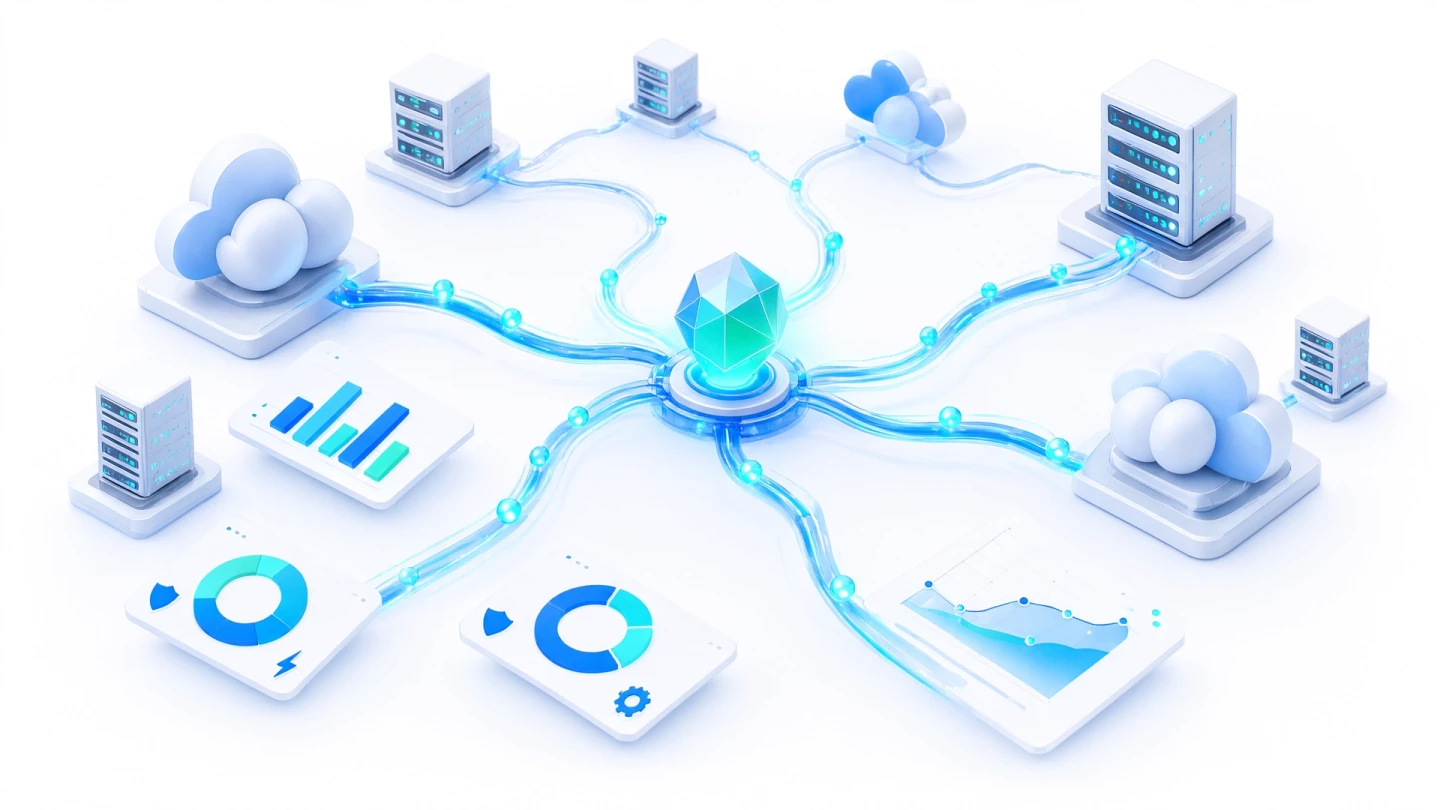
Ramp, the $13 billion corporate expense management platform, has announced the launch of Router - an AI model router that allows businesses to route requests to multiple AI models from a single interface. This move marks a notable expansion of the fintech into the booming AI infrastructure market.
What is an AI model router?
An AI model router is a middleware layer that enables applications to automatically select and route requests to the most appropriate AI model based on criteria such as cost, latency, or performance on specific tasks. Instead of hardcoding to a single provider (like OpenAI GPT-4), a router allows businesses to flexibly switch between multiple models - OpenAI, Anthropic Claude, DeepSeek, Google Gemini, xAI Grok - without changing code.
OpenRouter pioneered this model in 2023, providing a unified API accessing hundreds of models. Now Ramp enters the competition with the advantage of already having millions of business customers using their expense management platform.
Key features of Ramp Router
Router provides multiple “strategies” to optimize request routing:
Flex usage tiers: Prioritizes providers’ flex packages when available, helping reduce costs.
Benchmark-based routing: Allows users to specify up to 3 benchmarks (e.g., MMLU, HumanEval, GSM8K) and Router automatically selects the model with the highest score on those benchmarks.
Difficulty-based routing: Routes only complex problems to expensive models (like GPT-4 Turbo, Claude 3 Opus), while simpler tasks are handled by cheaper models (GPT-3.5, Claude Haiku).
Detailed dashboard: Shows token spend, cost per model, average latency, fallback attempts, and other important metrics - similar to the expense management dashboard Ramp has built.
Pricing model and data retention
Router is free to use through the end of 2026, but users still pay inference costs for the AI models (Ramp only does routing, doesn’t host models). The company hasn’t announced pricing after 2026, but it can be expected to charge by volume or subscription tier.
Notably, Router has an opt-out data retention policy by default. It will record model inputs, outputs, and tool calls for 1 year to improve the product, although Ramp承诺 to remove personally identifiable information (PII) before using data for this purpose. Businesses sensitive about data privacy need to consider carefully or request opt-out.
Comparison with OpenRouter
OpenRouter currently provides access to over 200 models from dozens of providers, while Ramp Router only supports models from OpenAI, Anthropic, DeepSeek, Moonshot, Minimax, Nvidia, xAI, and Z.ai - about 8 major providers.
However, Ramp has the advantage of integration with the existing enterprise ecosystem. Customers already using Ramp for expense management, corporate cards, and bill pay can easily add Router to their workflow without onboarding a new vendor. This is particularly important for small and medium businesses (SMBs) looking to simplify their technology stack.
Implications for global markets
With the explosion of AI adoption in enterprises, AI routers like Ramp Router can solve many practical problems:
Avoiding vendor lock-in: Businesses don’t want to depend on a single AI provider, especially as model prices and quality change rapidly.
Cost optimization: With AI inference costs potentially accounting for 10-30% of total technology costs, intelligent routing helps significantly reduce monthly bills.
Compliance and data residency: Markets like Japan and the EU have strict data residency requirements. Routers allow routing requests to models hosted in-country, meeting legal requirements.
Multi-model strategy: Many enterprises are adopting a “best model for each task” strategy - using GPT-4 for complex reasoning, Claude for long-context analysis, Gemini for multimodal tasks. Router automates this strategy.
Future of the AI infrastructure market
Ramp’s move shows the convergence trend between fintech and AI infrastructure. Enterprise financial platforms are expanding into AI management, while AI providers are building billing and usage tracking similar to expense management.
In the next 12-18 months, we can predict:
- More fintechs will launch similar AI routers (Brex, Divvy, Airbase)
- AI routers become commodity, with routing prices dropping near zero
- Real value shifts to value-added services: optimization, compliance, analytics
- Consolidation: smaller routers acquired by hyperscalers (AWS, Azure, GCP)
With Ramp Router, the AI infrastructure race is no longer just for AI labs - it has expanded to enterprise platforms that already have distribution and trust from customers.
Source: Ramp launches its own AI model router, called Router — TechCrunch, August 20, 2026