

 Vietnamese
 Japanese
 English
Visa and Mastercard restore international card payments in Syria after 15-year ban
Fujigo Software Solutions
Member of M&C Holdings (Japan)
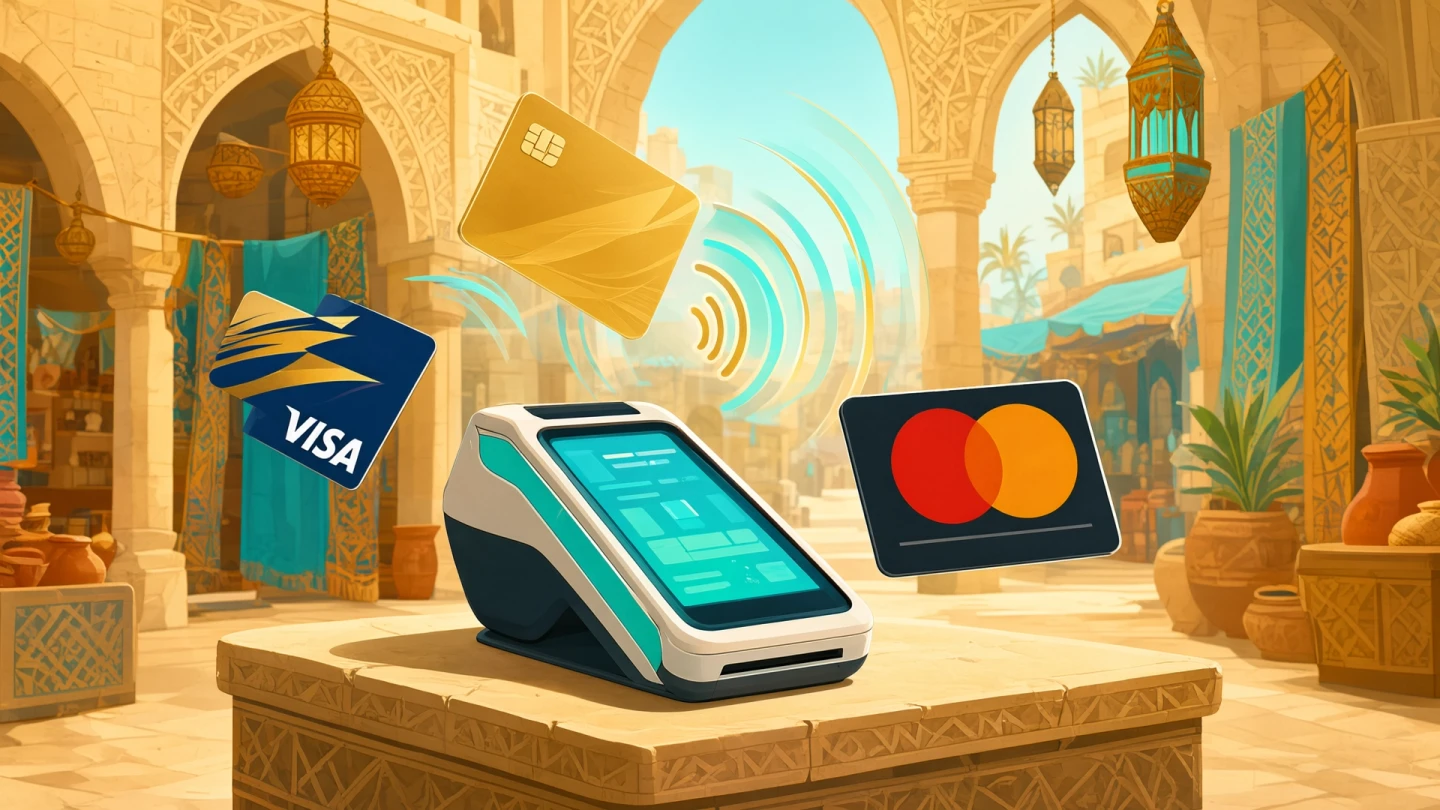
Visa and Mastercard have announced the restoration of international card payment services in Syria, ending a 15-year financial embargo following the US government’s formal removal of Syria’s terrorism designation. This decision is not only a significant geopolitical event but also demonstrates the critical role of global payment infrastructure in post-conflict economic reconstruction.
Historical context: 15 years of financial isolation
In 2011, as the Syrian civil war erupted, the US and EU imposed comprehensive sanctions to isolate Syria from the international financial system. Visa and Mastercard were forced to cease operations in the country, completely cutting Syrian citizens off from global payment networks.
For the past 15 years, Syrians have relied on:
- Cash (Syrian pounds and black-market USD)
- Hawala systems (informal money transfers through intermediaries)
- Stablecoins (USDT, USDC) via P2P exchanges
The restoration of card payments is not merely about convenience — it’s the first step toward Syria’s reintegration into the global economy.
Immediate economic impact
1. Remittances — Syria’s lifeline
Remittances from the Syrian diaspora (estimated at 8-10 million people abroad) account for approximately 20-25% of Syria’s GDP. Before 2011, remittances flowed through Western Union, MoneyGram, or bank transfers. After 2011, transfer costs skyrocketed to 10-15% (versus the typical 2-3%) due to reliance on informal channels.
With Visa/Mastercard’s return:
- Transfer costs could drop to 3-5%
- Processing time reduced from days to minutes
- Greater transparency in money flows (reduced money laundering risk)
2. Tourism and trade
Syria possesses rich cultural heritage (Damascus, Palmyra, Aleppo) and significant tourism potential. International card payments are a prerequisite for reviving the tourism industry, which has declined 90% since before the war.
3. Infrastructure reconstruction
International contractors participating in Syria’s reconstruction (estimated at $400 billion needed) will be able to make and receive payments more easily. This is crucial for attracting foreign investment.
Challenges and risks
Compliance and AML/KYC
Syria remains on the FATF (Financial Action Task Force) “high-risk jurisdictions” list. International banks must apply enhanced due diligence (EDD) to all Syria-related transactions.
Visa and Mastercard require banks issuing cards in Syria to:
- Implement AML/CFT systems meeting international standards
- Report suspicious transactions (STR) to authorities
- Comply with sanctions screening (even though sanctions have been lifted, specific individuals/entities may still be listed)
Political risk
Syria’s political situation remains unstable. Areas under Kurdish control (northeastern Syria) and Idlib province (opposition-controlled) may not immediately adopt card payments.
Additionally, the US could reimpose sanctions if human rights or security conditions deteriorate. International banks must prepare for “reverse integration” scenarios — rapid market withdrawal.
Technical infrastructure
Syria’s banking system was severely damaged during the war. Core banking systems, ATM networks, and POS terminals need complete upgrades or replacement.
Visa and Mastercard estimate that rebuilding Syria’s card payment infrastructure to a basic level will require 2-3 years and $500 million in investment.
Lessons for Vietnam and Japan
Vietnam: Digital payments and post-conflict reconstruction
Vietnam has experience building digital payment infrastructure from scratch (post-1975). Lessons from Syria can be applied to other potential markets:
- Myanmar (ongoing internal conflict)
- Afghanistan (post-Taliban takeover)
- Sanctioned countries (Iran, North Korea — if conditions change)
Vietnamese fintech companies (MoMo, VNPay, ZaloPay) can leverage their domestic experience to expand into these markets.
Japan: ODA and reconstruction support
Japan is one of the largest ODA donors for Syria’s reconstruction (estimated $10 billion in commitments from 2011-2025). The restoration of card payments creates conditions for Japanese construction companies (Shimizu, Obayashi, Kajima) to participate in reconstruction projects more easily.
Japanese megabanks (MUFG, SMBC, Mizuho) have extensive experience in emerging markets and can serve as bridges in reintegrating Syria into the global financial system.
Conclusion
Visa and Mastercard’s restoration of payments in Syria demonstrates the power of financial infrastructure to drive economic reconstruction and international integration. However, success depends on political stability, strict compliance, and long-term infrastructure investment.
For Japan and Vietnam, this represents an opportunity for fintech companies and banks to expand into new markets, leveraging domestic experience and ODA roles. Syria’s lesson reminds us that digital payments are not just a convenience — they are fundamental infrastructure of the modern economy.
Source: Visa, Mastercard launch international card payments in Syria after US lifts terrorism designation — Reuters, August 28, 2026